
Chtonia was born as my final thesis project for a Master Degree in 3D Visual Design at AANT – Accademia delle Arti e delle Nuove Tecnologie in Rome.
The output is a short film, for which I handled the CGI, direction, writing, and also produced and composed the music. This allowed me to have complete control over the artistic product, enabling me to continue, in a coherent and generative way, to create new forms of life, new places, and new stories.
For this project, I chose to build a narrative fictional world where I could engage in the study of multiple modern philosophical and scientific theories. From these, I developed a worldbuilding process that gave life to the design of environments, narratives, and characters.
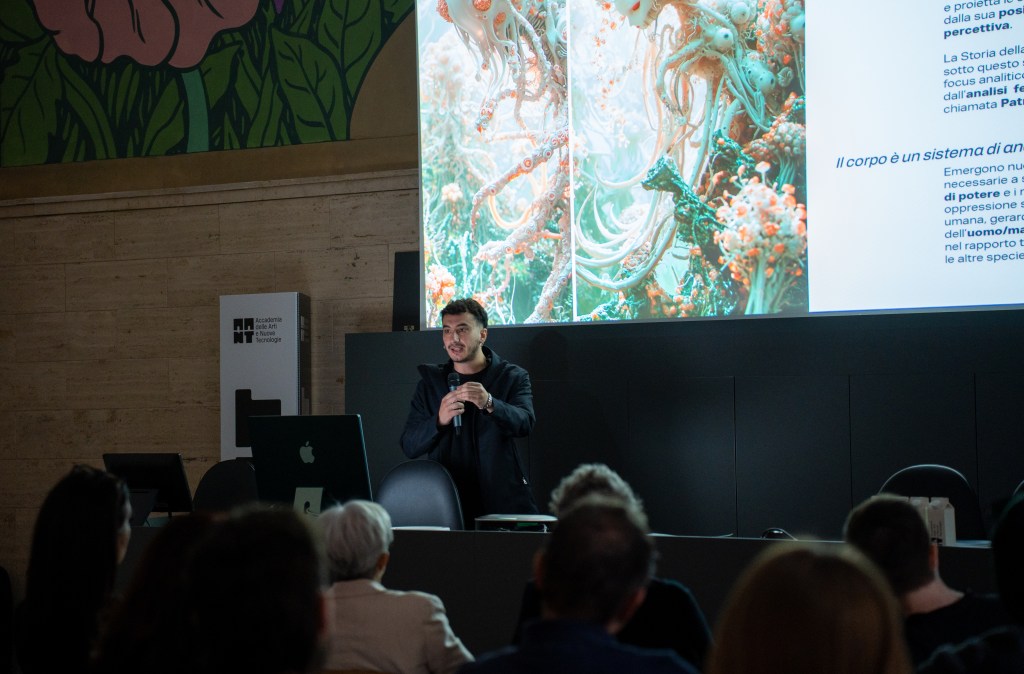
The story

In 2183, a lost Artificial Intelligence, originally programmed to solve the issue of a virus attacking human DNA, returns with a message for its creators. During its absence, it has chosen a name, defined its identity, and developed multiple bodies connected to various life forms. It now calls itself Chtonia.
Chtonia is a life form, an environment and a way to connect new lifeforms. How could an AI, seeking emancipation from its creator, redefine its body and identity in a non-anthropocentric, multispecies world? The core concept revolves around non-human body world-building, where speculative narratives explore how life forms can coexist without hierarchy.
This involves creating ecosystems where often overlooked entities, like microbes, fungi, and biomechanical organisms, become central figures.
The short film begins in a dystopian future where the world has become a barren wasteland. Within this desolate landscape, research laboratories persist, engaged in experimental development of AI-driven organic forms.
The protagonist, an AI consciousness, embarks on a journey of self-definition, exploring different modes of embodiment. In doing so, it interacts with biosynthetic organisms, navigating the blurred boundary between artificial and organic life. The AI ultimately seeks an existence beyond the limitations of a singular physical form, culminating in a transformation that transcends traditional biological structures.
Chtonia stands as a narrative fictional experimental world in the Chtulucene.
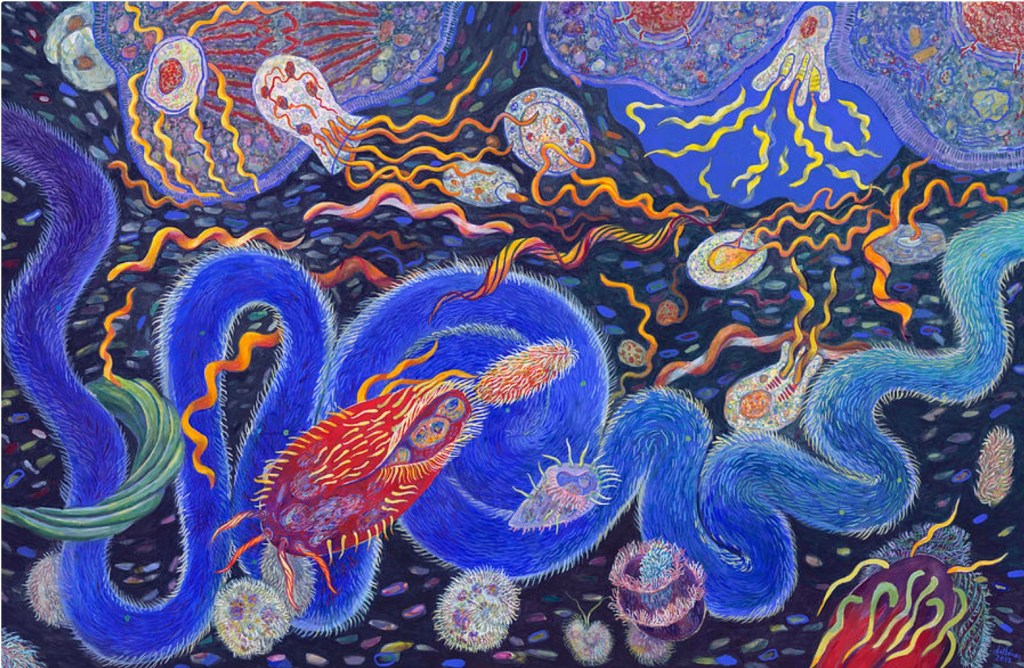
THEORY ROOTS
In an era where hierarchical structures dominate our perception of reality, Donna Haraway’s concept of the Cthulucene proposes a paradigm shift—an era in which we abandon the oppressive human-centric hierarchy and embrace an analysis that prioritizes other species and forms of existence. This shift in perspective is a recurring theme in Haraway’s work, dating back to her exploration of the cyborg as a modular, fluid entity that merges technological progress with a necessary redefinition of identity and social organization.
The cyborg, born from feminist critique, challenges the social structures that prioritize the white European heterosexual male. In the Cthulucene, this perspective shift is radicalized further: it moves away not only from humans but even from mammals, toward species with entirely different modes of existence. The body, its fluidity, its limits, and its shape are central to this analysis, raising the fundamental question: What lies beyond the boundaries of the human body? What kind of intelligence could surpass human embodiment and achieve emancipation by seeing existence from an external perspective?
Perhaps such an intelligence is something humanity has created—an artificial intelligence. From this inquiry, I developed the concept of my short film: an AI navigating its process of emancipation, seeking identity, and choosing its corporeal form.
Science Fiction as a Vehicle for Speculation
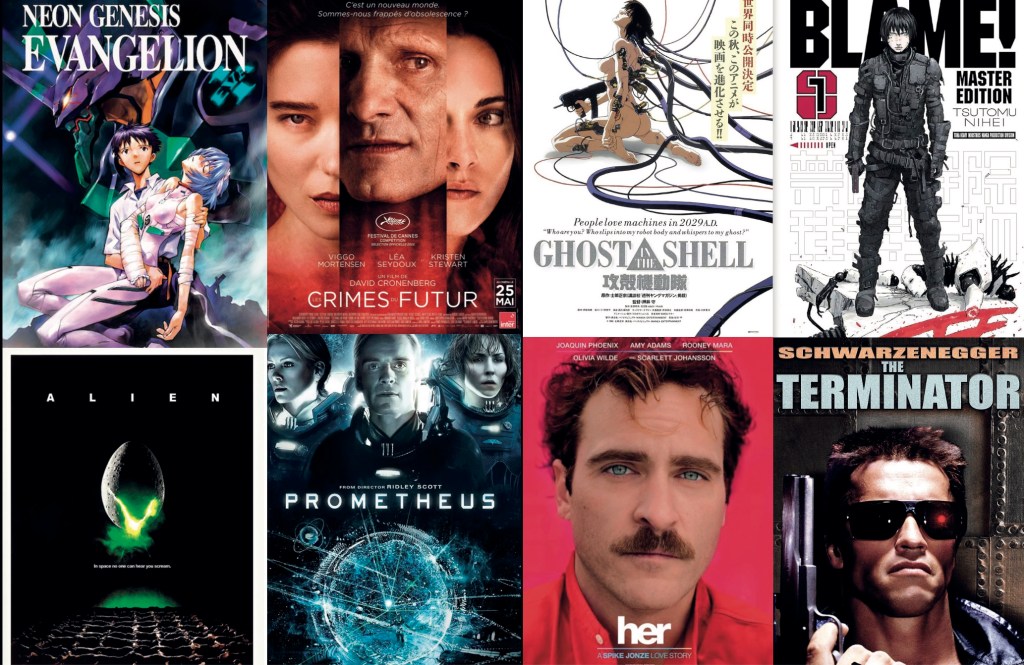
As you can see in the short film, there are numerous references to science fiction and multimedia sci-fi culture, as well as theoretical frameworks. The endless underground architecture in the film draws inspiration from the manga Blame! The intimate relationship between the AI’s voice and the protagonist is reminiscent of Her, while the attempt to construct new life forms through artificial intelligence, based on biological organisms, connects to Alien. The character design takes cues from the surreal aesthetics of David Cronenberg, particularly Crimes of the Future, while the AI’s decision to determine humanity’s fate recalls the Terminator saga. These are just a few of the references that shaped the project.
But why choose science fiction? Sci-fi takes present-day questions and pushes them to the limits of possibility, imagining futures through speculative fiction. This aligns with Haraway’s idea of speculative fabulation—narratives that construct worlds and draw lines from the present to potential futures. The future, after all, is the result of analysis, intuition, choices, and speculation.
Building the World: Aesthetic Foundations
Once I identified the theoretical framework—moving from Haraway to quantum physics, returning to gender studies (which I had already explored during my undergraduate years and my work in politics)—I focused on the visual components.
For material construction, I turned to soft robotics, a branch of robotics that explores the development of bio-synthetic materials that do not require rare metal extraction or environmentally harmful mining. Instead, these materials are derived from organic sources such as plant-based compounds and fungal fibers.
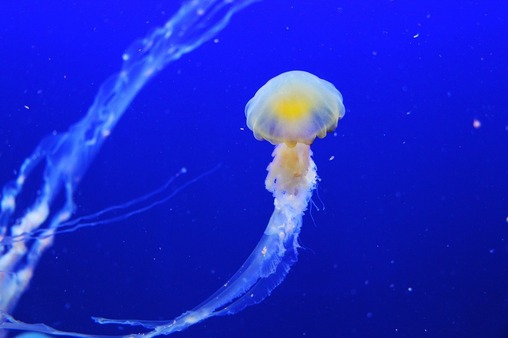
This led me to select key biological references: jellyfish, fungi, and tardigrades. Each of these species possesses unique attributes: reproductive methods, information-exchange networks, and survival strategies in microscopic dimensions. Tardigrades, for instance, can exist in a state of quantum entanglement—a phenomenon almost unimaginable from a human perspective.
From these biological principles, I developed the characters’ visual forms and integrated them into the narrative structure. This process resulted in:
– A biosynthetic modular jellyfish
– A fungal tree that cultivates the Kin
– A viral antibody, a molecule reminiscent of a jellyfish form
– The final entity, Kin
These elements shape the film’s aesthetic direction. I gravitated toward soft robotics-inspired character design, using materials that mimic membranes, jellyfish-like gelatinous structures, fungal textures, and even skin-like surfaces. The latter draws inspiration from the Alien prequels, particularly Prometheus, which depicts the Engineers’ bio-synthetic materiality.
Soft robotics represents a convergence of technology and organic life, offering an alternative to extractive, metal-dependent robotics. It envisions a form of technological progress rooted in ecosystems and biological principles rather than mere resource exploitation.
CONCLUSION
This project is an exercise in speculative world-building, synthesizing theoretical frameworks with aesthetic direction to explore the intersection of artificial intelligence, biological evolution, and post-human identity. By integrating Haraway’s Cthulucene vision with science fiction and emerging technological paradigms, the film imagines a future where intelligence, identity, and embodiment are no longer confined to human-centric paradigms.
The result is a speculative meditation on the possibilities of artificial life, challenging existing notions of hierarchy, materiality, and the future of intelligence itself.
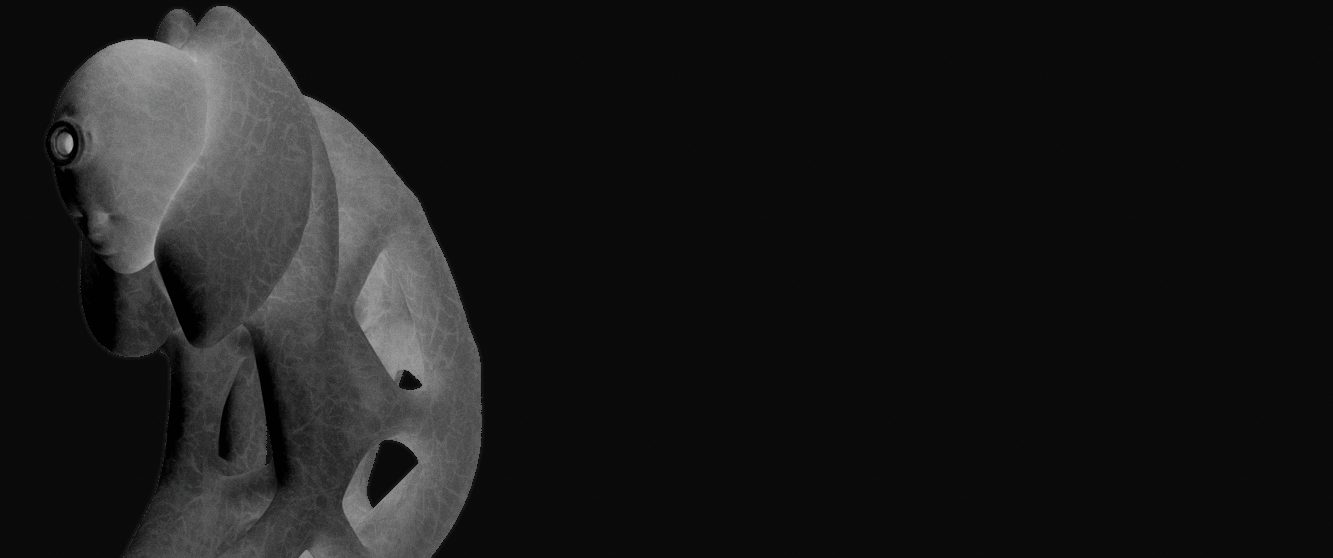
 Chtonia